Dear Parent,
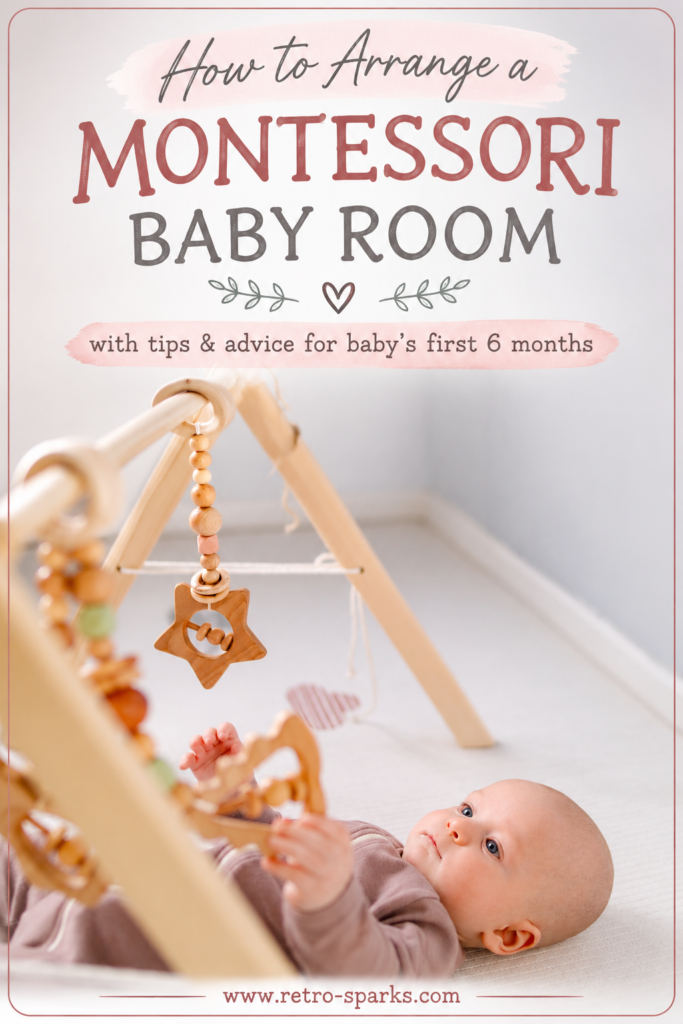
If you are wondering how to arrange a Montessori-inspired baby room for the first six months, you are in the right place.
The idea is not to fill the room with expensive furniture or the latest baby gadgets. It is to create a calm, welcoming space where your baby can feel safe, loved, and gradually discover the world.
I first came across Montessori’s educational philosophy during my studies. At the time, my focus was mainly on andragogy — adult education — rather than pedagogy. That changed when I became pregnant in 2019.
I started reading about child development and ways to support a little person as they grow. One of the books that introduced me to this approach was Montessori from the Start: The Child at Home, from Birth to Age Three by Paula Polk Lillard and Lynn Lillard Jessen, a gift from my sister.
And I fell in love with the idea of preparing an environment around the child rather than expecting the child to fit into ours.
Montessori is an educational philosophy, not a substitute for health and safety recommendations — and when it comes to babies, safety always comes first.
This article brings together the ideas that inspired me and my experience as a mother at the time. But I have also updated the practical advice to reflect current safe-sleep guidance.
A Montessori-inspired environment: simplicity, order, and freedom to explore
One of the things I find most appealing about Montessori is the thoughtful environment. A baby does not need a room overflowing with toys, bright decorations, and complicated equipment. A warm, uncluttered space, natural light, a few carefully chosen objects, and a predictable place for everyday routines can be more than enough.
Think about the room from your baby’s point of view. Is there a quiet place to rest? Can you reach everything you need for feeding and changing? Is there a safe area where your little one can spend time on the floor while you are nearby? Functionality, simplicity, beauty, and safety can all work together.
The four areas of a Montessori-inspired baby room
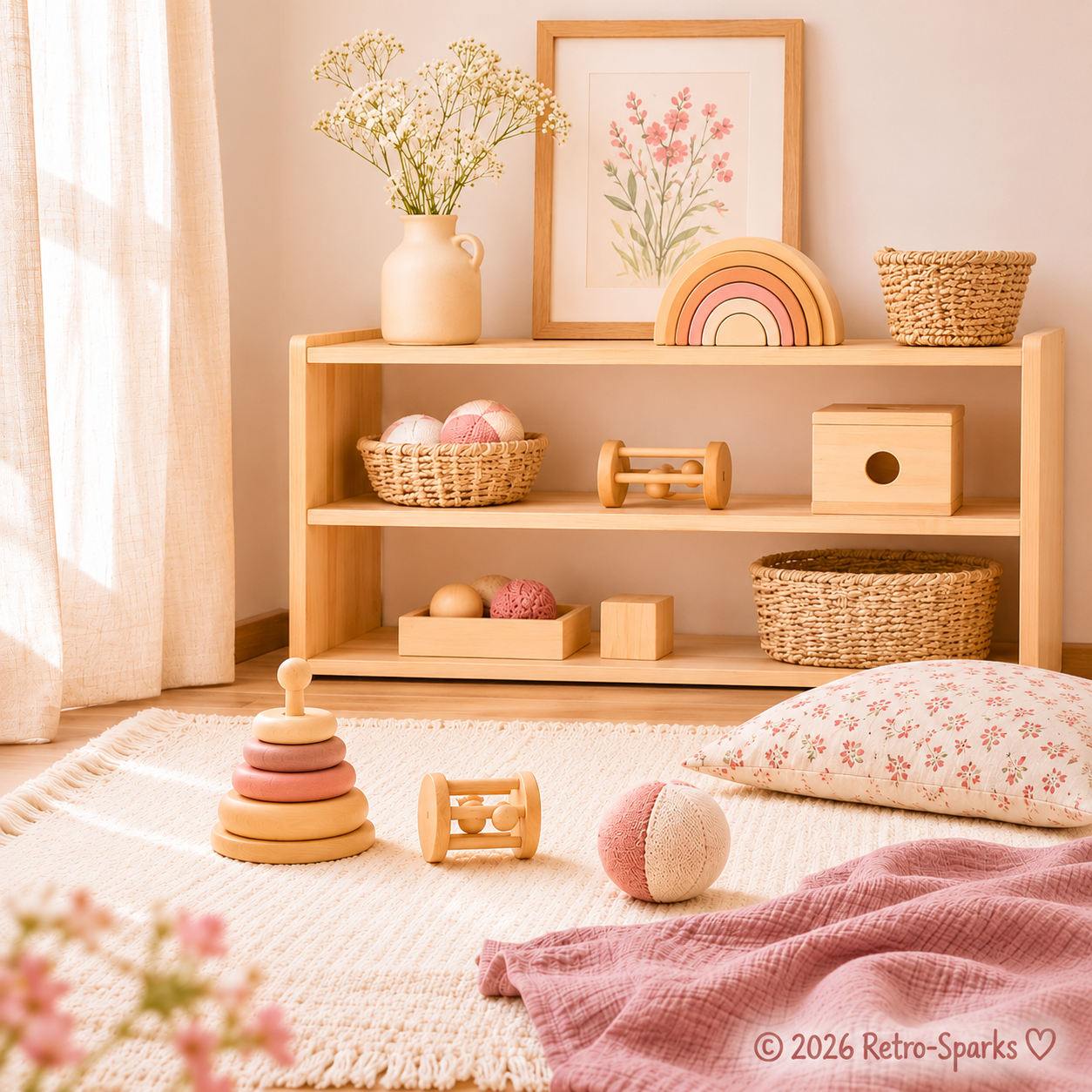
You can organise the room around four practical areas: sleeping, feeding, care and changing, and movement and play. They do not need to be separate rooms or elaborate stations. Even a small space can be arranged thoughtfully.
1. The sleeping area
In Montessori settings, you may come across floor beds and low sleeping arrangements. They are often discussed in connection with a child’s freedom of movement. However, for babies aged 0–6 months, it is essential not to confuse a Montessori-inspired room with a safe infant sleep space.
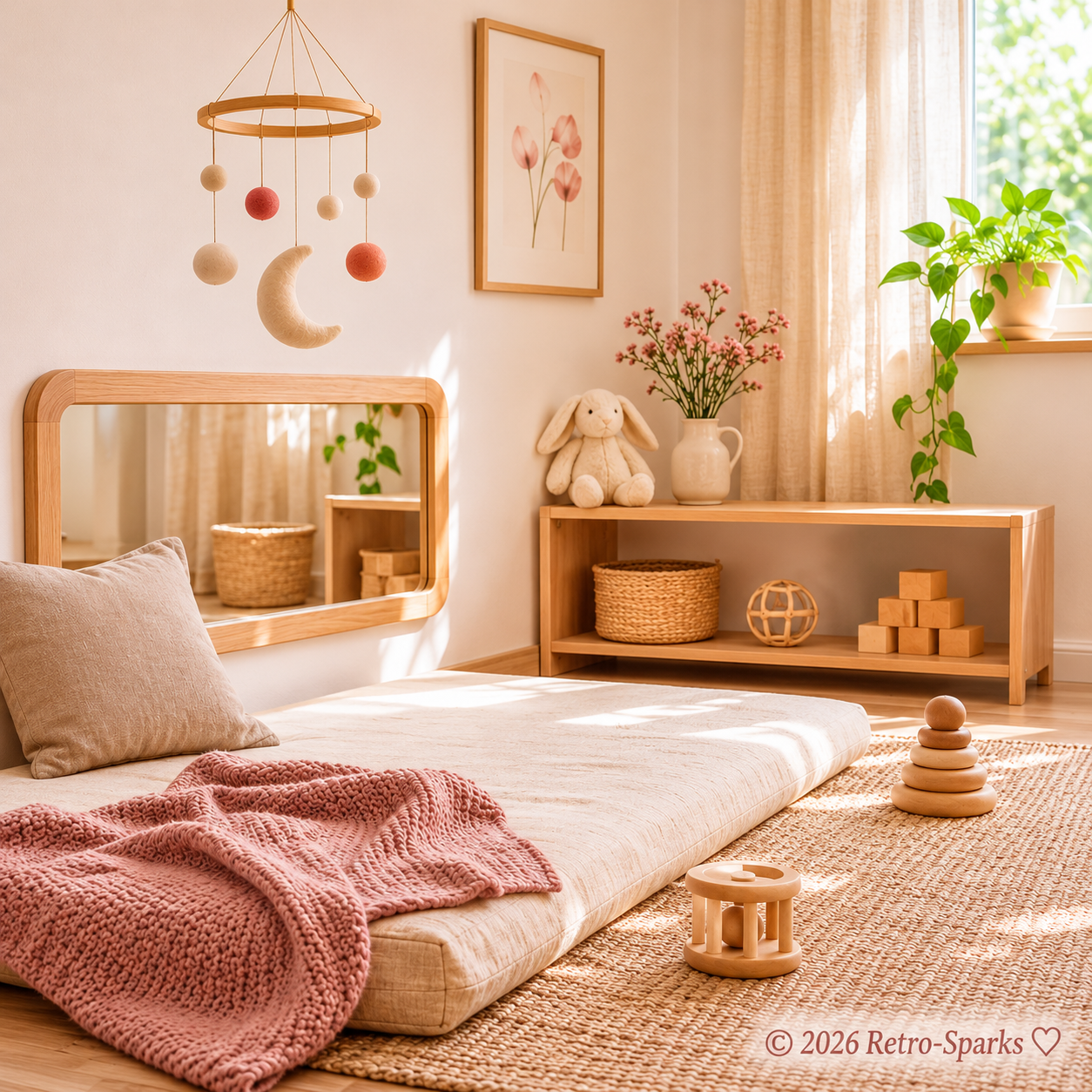
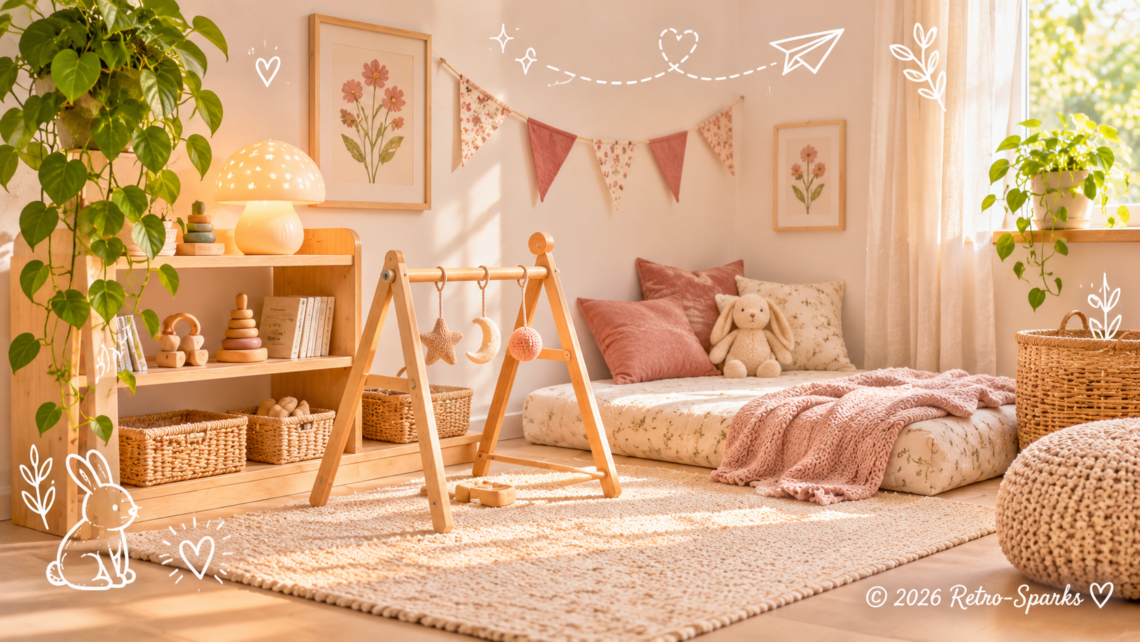
(The floor-bed arrangement shown here is for room-design inspiration only; it is not a safe sleep setup for babies aged 0–6 months.)
For every nap and night-time sleep, place your baby on their back on a firm, flat, level sleep surface designed and approved for infant sleep, such as a suitable cot or bassinet, with a fitted sheet only. Keep pillows, cushions, bumpers, loose blankets, soft toys, and other soft items out of the sleep space. The safest arrangement is to have your baby’s own sleep space in your room, close to your bed, for at least the first six months.
That means no adult mattress on the floor with cushions around it as an infant sleep solution, and no topponcino or other soft positioning pillow for unsupervised sleep. A floor bed may be something to explore later, when your child is older, mobile, and developmentally ready — but it should never replace current safe-sleep recommendations for a young baby.
For practical guidance, see the NHS safer-sleep advice and the American Academy of Pediatrics recommendations. Always follow the guidance of your baby’s healthcare professional and the safety instructions for your cot or bassinet.
2. The feeding area
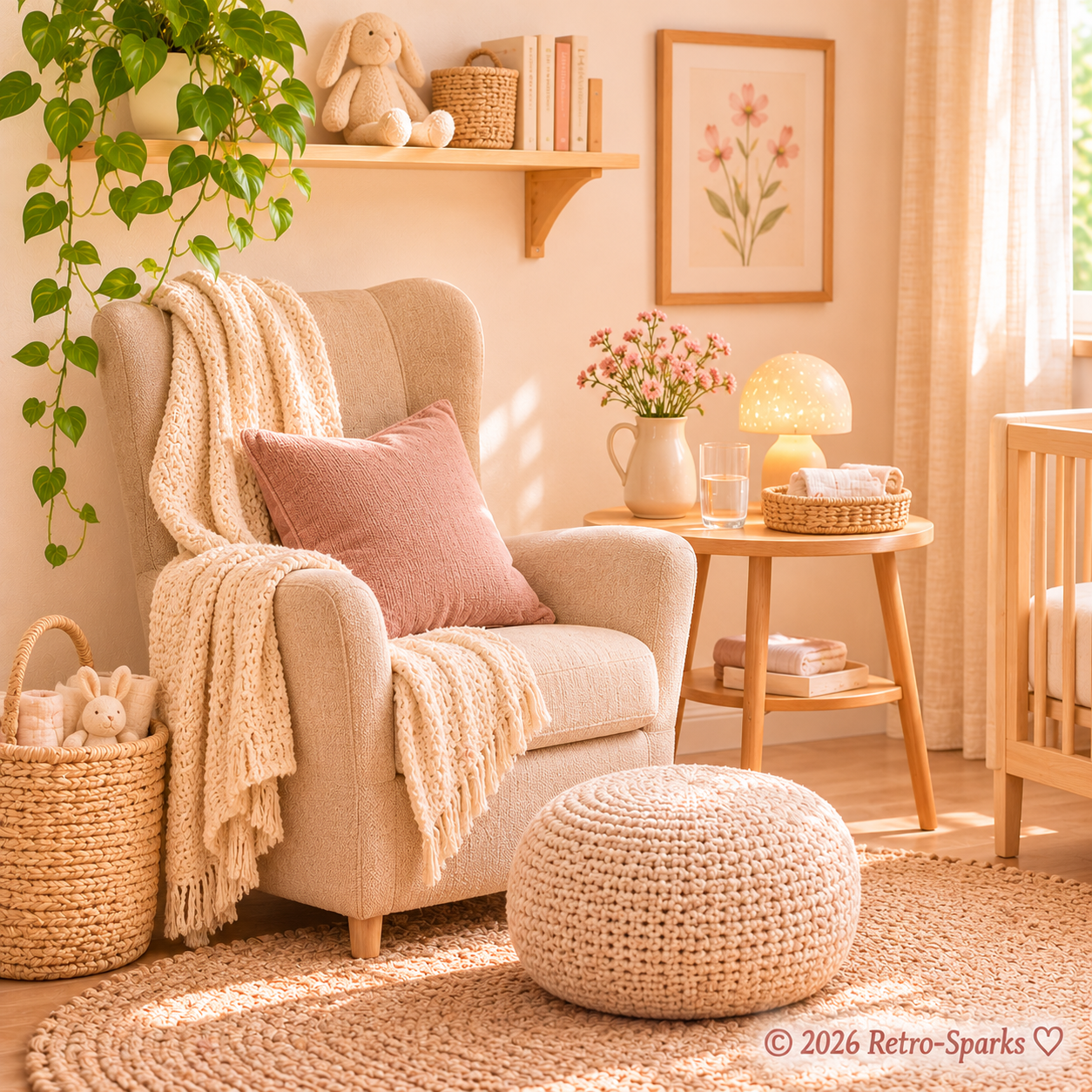
A comfortable chair can make feeding time easier for both you and your baby. Add a footrest if it helps you sit comfortably, and keep a small table or basket nearby for essentials such as a muslin cloth, water for yourself, and anything else you regularly need.
There is no need to make this corner elaborate. The most important thing is that you feel supported and can focus on your baby. Breastfeeding, expressed milk, or formula feeding — whatever your feeding journey looks like — this can be a quiet place to pause, connect, and get to know one another.
3. The care and changing area
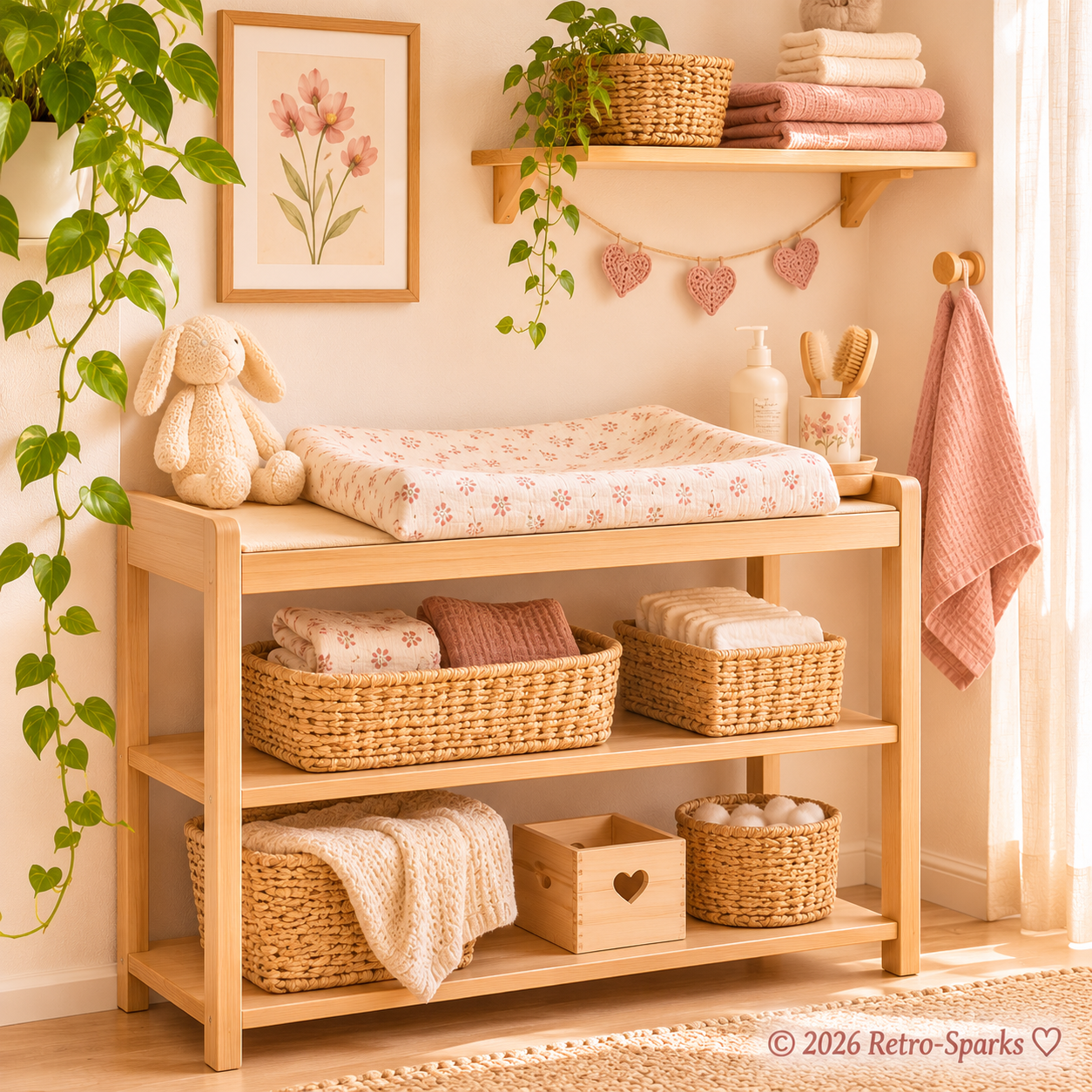
Keep nappies, wipes or cotton pads, clean clothes, and other everyday care items together so that you are not searching for them with a baby in your arms. A changing table can be useful, but a safe, designated changing mat on the floor may work just as well. If you use an elevated changing surface, keep one hand on your baby at all times and never leave them unattended.
A small basket for laundry and a few accessible drawers for clothes can make the daily routine feel calmer. Store medicines, creams, small objects, and anything potentially harmful well out of your baby’s reach. Keep the surface simple: the fewer things you need to move around, the easier it is to keep the area organised.
4. The movement and play area
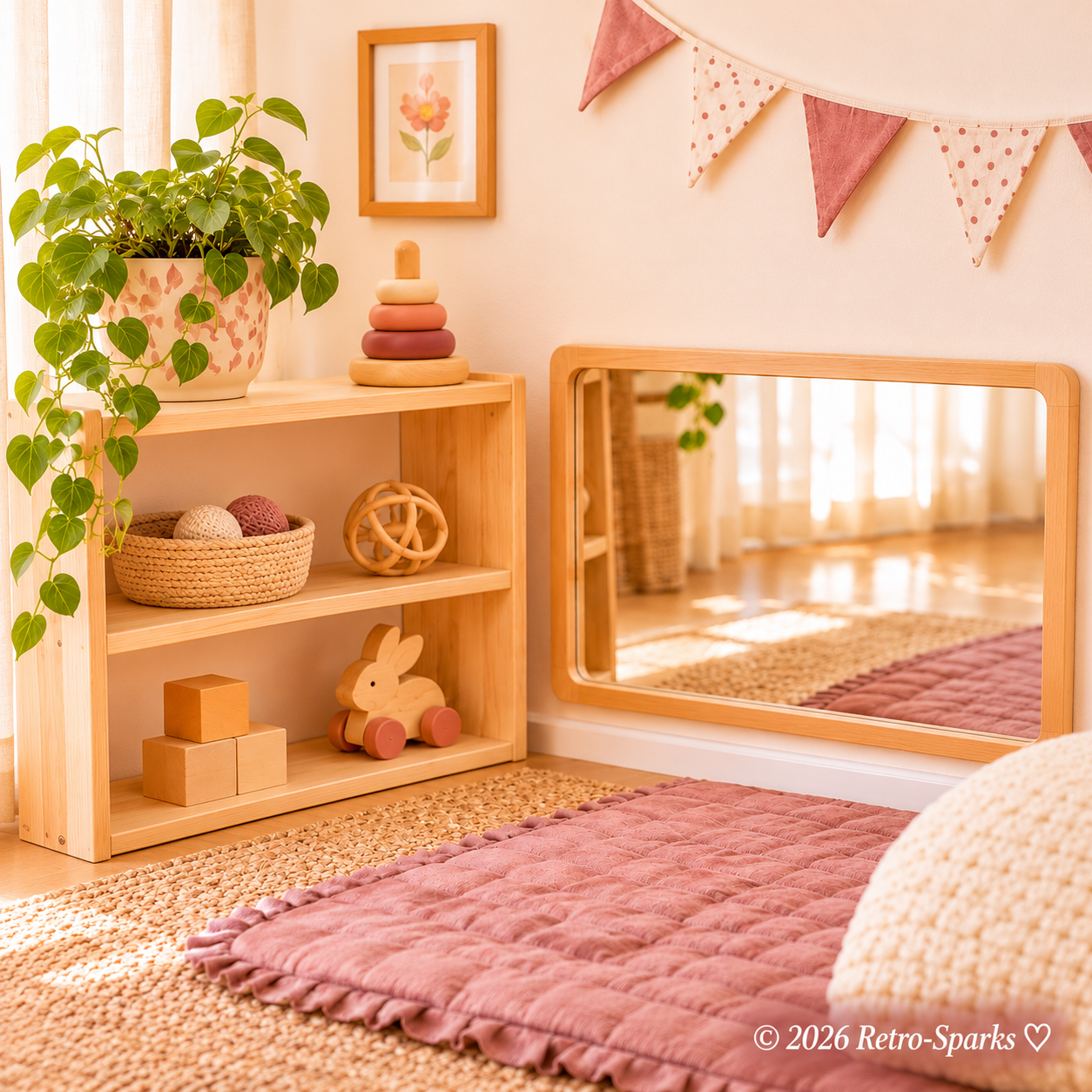
In the first months, your face, voice, and presence are among your baby’s most familiar sources of comfort and stimulation. You do not need a room full of toys. A clean, firm play mat on the floor, a little time to look around, talking, singing, and gentle interaction can offer plenty of opportunities to discover the world.
As your baby grows, you can introduce a small selection of simple, age-appropriate objects. Choose toys that are safe for your baby’s developmental stage, check them regularly for loose or damaged parts, and avoid anything with small pieces or long cords.
A securely fixed, baby-safe mirror can be an interesting feature in the play area, positioned where your baby can look at it during supervised awake time. Make sure it cannot fall, break, or be pulled down. It should never be placed inside the cot or where it could fall onto your baby.
You may also see Montessori mobiles, such as the Munari or Gobbi mobile, in nurseries and baby rooms. If you choose to use one, treat it as an activity for supervised, awake time only: secure it firmly, keep it well out of your baby’s reach, and remove it as soon as your baby can reach or pull at it. Keep mobiles, cords, and hanging decorations completely out of the sleep space.
A little note about tummy time
Time on the tummy can help babies practise movement and build strength, but it is only for when your baby is awake and closely supervised. Start with short, comfortable sessions and follow your healthcare professional’s advice. For every sleep, always place your baby on their back. The CDC’s safe-sleep guidance explains the difference between supervised tummy time and the recommended back-to-sleep position.
Follow your baby, not a decorating checklist
The purpose of a prepared environment is not to make a baby independent before they are ready. It is to offer a safe and supportive space in which they can gradually explore, move, rest, and interact at their own pace. Observe your baby. Notice what catches their attention, what makes them comfortable, and when they need a break or your closeness.

And remember that the most beautiful baby room is not necessarily the one in a magazine. It is the one that works for your family: calm enough to rest in, practical enough for everyday care, and full of warmth, understanding, and love.
You do not need to buy everything at once. Start with the essentials, keep the space simple, and let it evolve as your baby grows. A supportive environment is created through thoughtful little choices, not through a perfect shopping list.
Love,